LITTLE ROCK – The Arkansas Pro Chapter of the Society of Professional Journalists is proud to announce the finalists in the 2024 Diamond Journalism Awards, a regional competition that attracts entries from Arkansas and six bordering states.
This year’s contest drew 538 entries in 82 categories, including divisions that recognize professional journalism, student journalism, and communications. SPJ members from Pennsylvania and Florida judged the competitions.
The winners will be announced on July 24 at an awards ceremony at the Ron Robinson Theater in Little Rock. A reception will begin at 5 p.m. and the program featuring Fox 16 News Anchors Kevin Kelly and Donna Terrell, Arkansas’ longest-running anchor team, will start at 6 p.m. Tickets to the event are $35 per person. To purchase tickets, go here.
Arkansas Advocate Sonny Albarado Hunter Field Antoinette Grajeda Tess Vrbin
Arkansas Catholic Aprille Spivey
Arkansas Children’s Health System Aprille Spivey
Arkansas Democrat-Gazette David Barham Bill Bowden Neal Earley Dale Ellis Jennifer Ellis Gwen Faulkenberry Joseph Flaherty Tommy Foltz Dwain Hebda Carrie Hill Alyson Hoge Aidian Holder Tony Holt Cynthia Howell Heather Kersten Grant Lancaster Frank Lockwood Brenda Looper Kyle McDaniel Thomas Metthe Colin Murphey Nick Popowitch Allison Shirk Josh Snyder Stephen Swofford Jenn Terrell Alex Thomas Staci Vandagriff Michael Wickline
Pine Bluff Commercial Byron Tate
Crafton Tull Crafton Tull Marketing Team Brittany Goff Wendy Jordan
The Associated Press Andrew DeMillo Adrian Sainz Ben Finley
The Associated Press, The Christian Chronicle, Religion Unplugged Bobby Ross Jr.
Cherokee Phoenix Mark Dreadfulwater Chad Hunter Will Chavez Micah Fletcher
MLK50: Justice Through Journalism Brittany Brown Vahisha Hasan Adrienne Johnson Martin Andrea Morales Jacob Steimer
Oklahoma Voice Nuria Martinez-Keel
InRegister Magazine Kelli Bozeman Sara Essex Bradley Hoa Vu
225 Magazine Benjamin Leger
Mississippi Free Press Heather Harrison Torsheta Jackson Donna Ladd Christian Middleton Shaunicy Muhammad Ashton Pittman William Pittman Aliyah Veal
KARK 4 News Caitrin Assaf Gary Burton Jr. Bob Clausen Stephen Goodale Kian McMahan Laura Monteverdi Jessica Ranck LV Randall
FOX 16 News/KLRT Kimberely Blackburn Cole Clevenger Tylisa Hampton Julian Jones Ashlei King Kevin Kelly John Matthews Ronni Romero Carmen Rose Donna Terrell Neale Zeringue
KNWA News/FOX 24 Anna Darling Brad Horn Chad Mira Lauren Motley Ethan Sam
THV11 Breandan Conyers Skot Covert Sarah Horbacewicz Lauren Johnston Zach Keast Kelly Tibbit
WVLT, Knoxville Ben Cathey Aimee Fowler Will Puckett Harry Sullivan Casey Wheeless
KATV Cassandra Webb
Little Rock Public Radio/National Public Radio Daniel Breen Josie Lenora Maggie Ryan
University of Arkansas at Little Rock Angelita Faller
Ouachita Baptist University Chase Hartsell
LSU Tiger TV Metia Carroll Adam Guttuso Haylee Kennedy Miguel Paredes Reyes Erin Rogers Ella Wales
The Herald/Arkansas State University Caroline Averitt Jerry Don Burton Rebecca Robinson Rachel Rudd Shelby Russom Elijah Templeton
The Reveille/LSUReveille.com Alison Agena Emily Bracher John Buzbee Colin Falcon Cross Harris Frank Kidd Lauren Madden Jacob Mathews Garrett McEntee Lyla McGuire Matthew Pellittieri Chloe Richmond Olivia Tomlinson Reveille Editorial Board
Delta Digital News Service Caroline Averitt Ibuki Hinohara Avery Jones Atsuki Ohbuchi
501 Life Magazine Tammy Keith
Madison County Record Ellen Kreth
The Daily Citizen Greg Geary
Law 360 Daniel Connolly Matt Fair Emily Field Allison Grande Jon Hill Brandon Lowrey
The Christian Chronicle Audrey Jackson Bobby Ross Jr.
World Christian Broadcasting/KNLS/WorldChristian.org Paul Ladd
The Arkansas Pro Chapter of the Society of Professional Journalists awarded $3,250 in scholarships to six students at the Arkansas College Media Association convention, which was hosted on April 12 at Ouachita Baptist University in Arkadelphia.
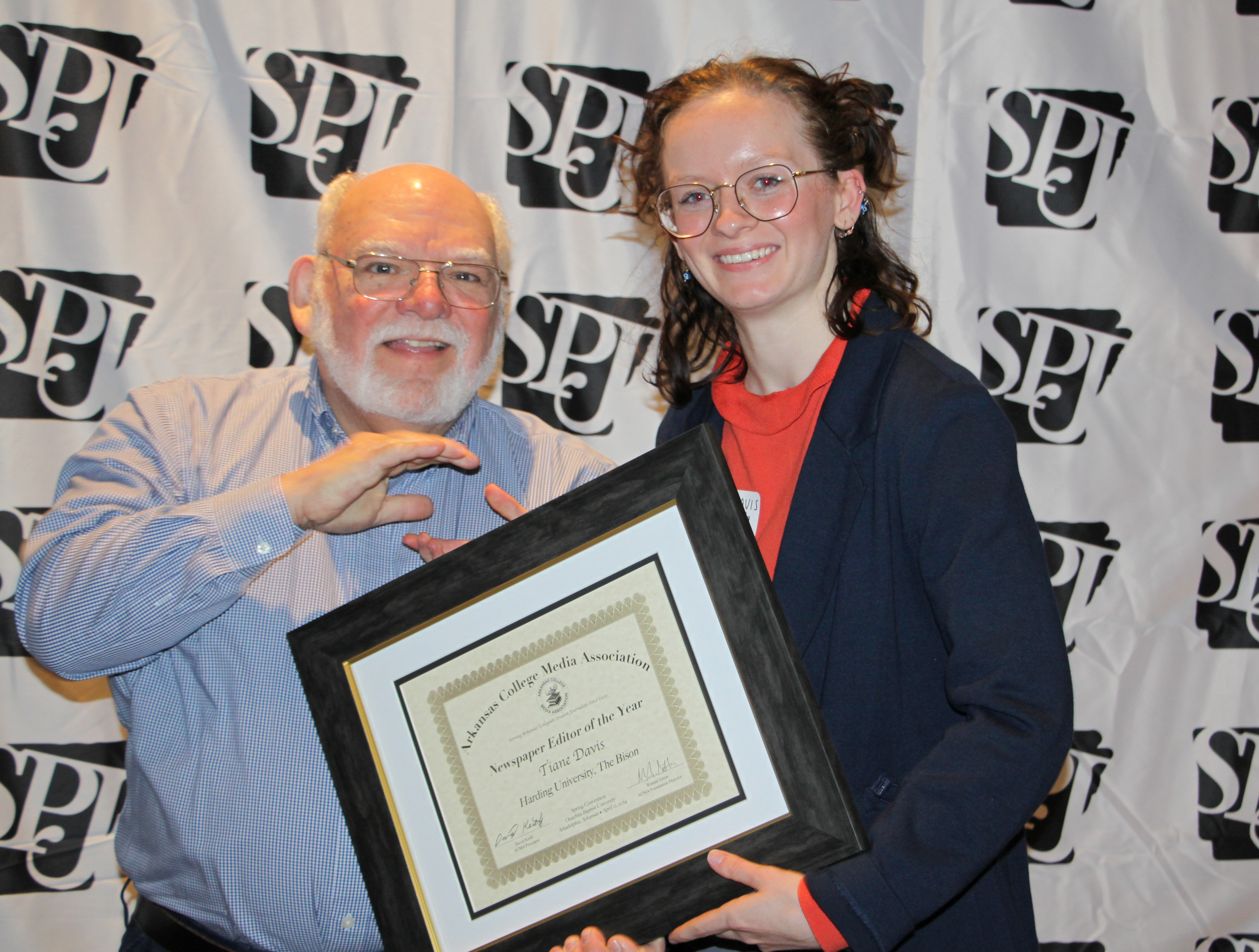
Tiane Davis of Harding University was named Newspaper Editor of the Year and received a $1,000 scholarship. The judge said Davis was “a fantastic choice for the best of the best. The sheer volume of praise heaped upon her by people who know her best speaks to her importance to the staff, the publication and the campus. She is a wonderful example of how best to lead and manage a publication.”
Chase Hartsell of Ouachita Baptist University was named Reporter of the Year and received a $1,000 scholarship. The judge said it was a tough decision in a highly competitive category. “This reporter demonstrated the value of both the tangible skills associated with text-based and broadcast journalism as well as the intangibles, such as curiosity, wonder and general nosiness. The ability to take one’s gifts and sharpen one’s skills to create the ultimate storyteller is not often found, but here it exists in nearly perfect form. One instructor noted this individual was the best he’d seen in 32 years of education. I would be hard-pressed to disagree with that assessment.”
Easton John of Arkansas State University was named TV Producer/Director of the Year and was awarded a $250 scholarship. “It is clear that the continuing coverage and dedication to the craft of broadcasting is evident in this aspiring individual,” the judge said. “Easton John should be on the watch list for many, as his abilities span across multiple platforms with vigor and purpose. Keep up the good work, always challenge yourself, monitor the competition, and continue to hold yourself to high ethical and moral choices. Stay the course, lead by example, and safe journeys on your bright media future ahead.”
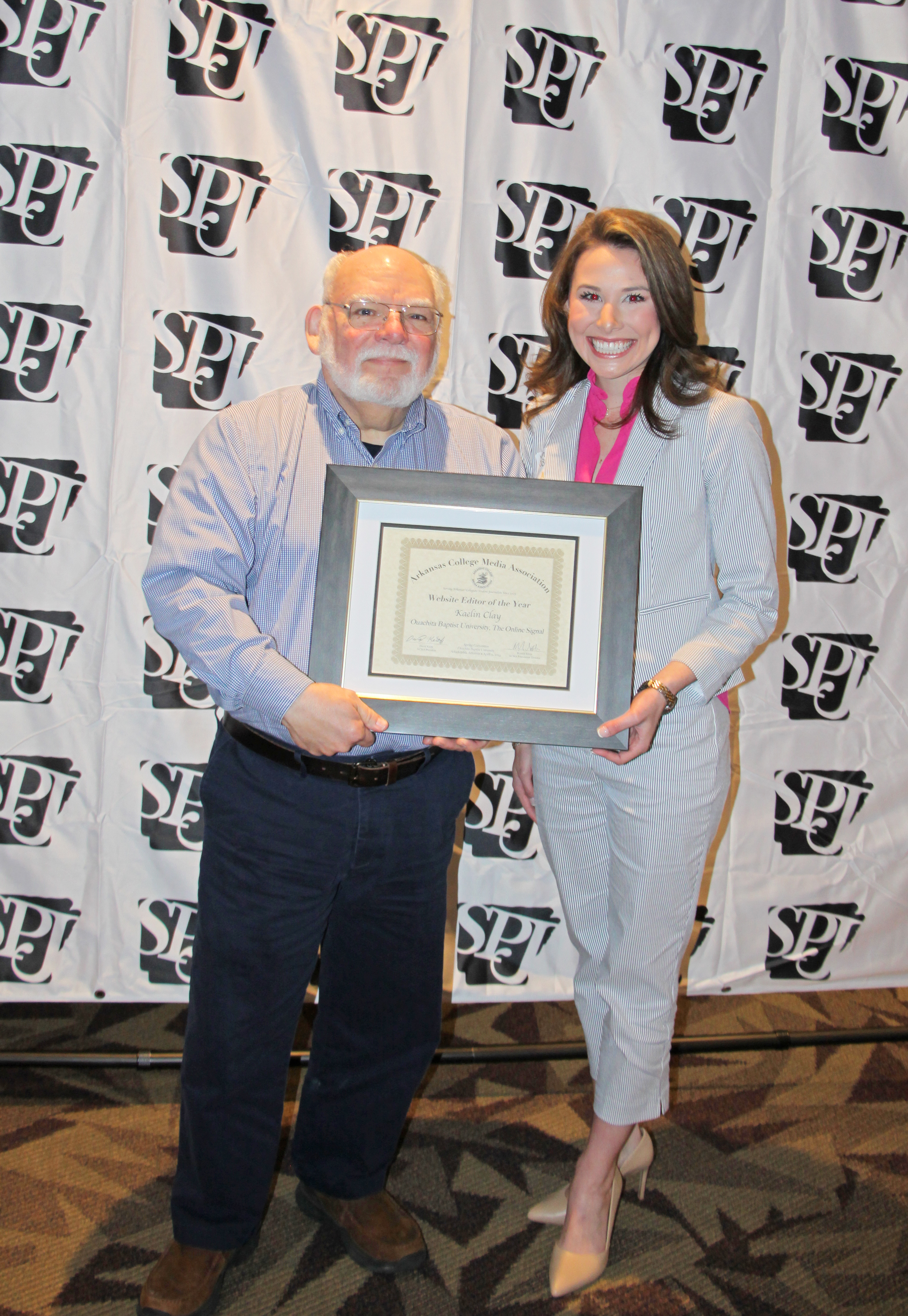
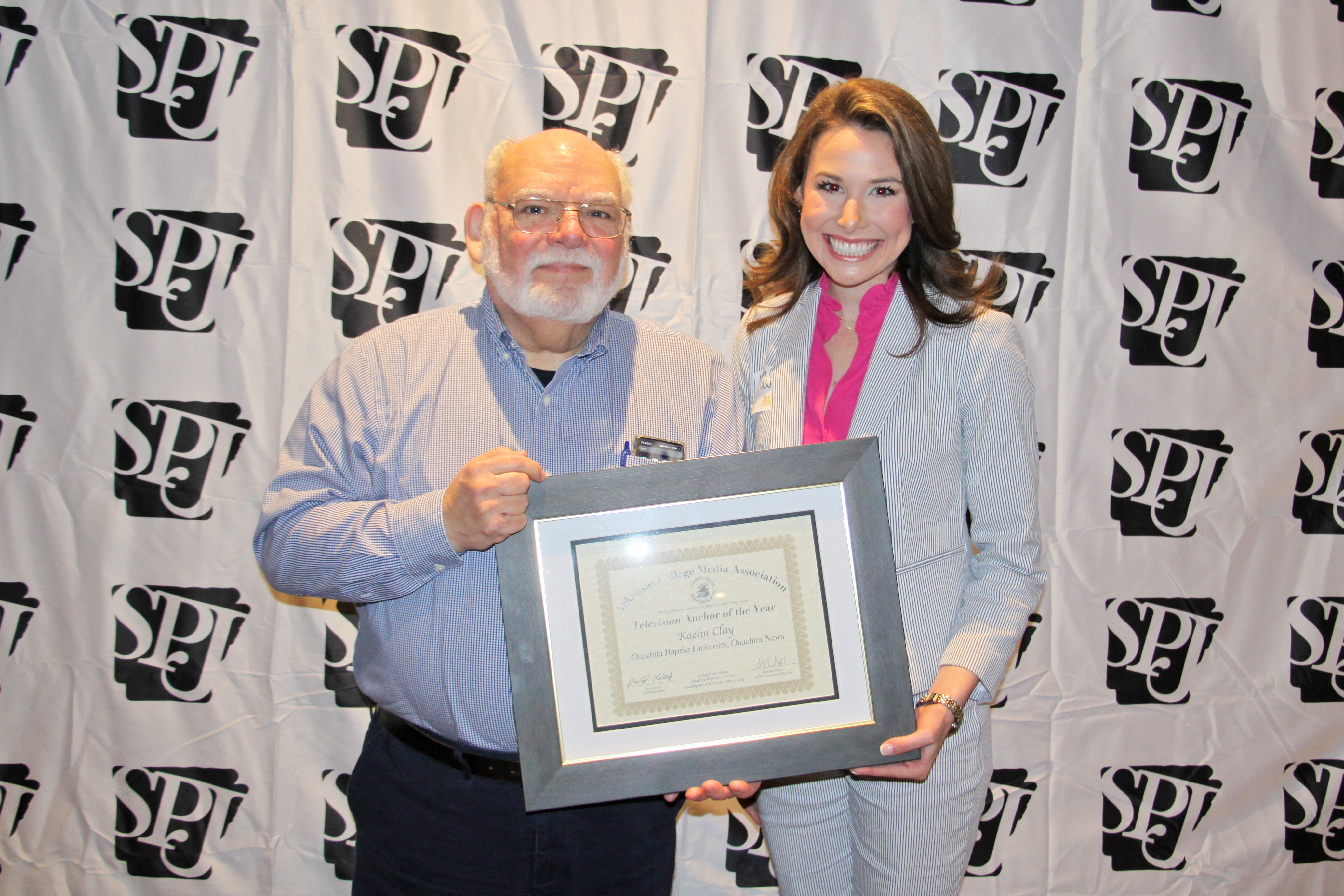
Kaelin Clay of Ouachita Baptist University won $250 awards for both Website Editor of the Year and Television Anchor of the Year. “All in all, it is clear that this person provides the heart and soul of this site and this site is worthy of great praise,” the judge said.
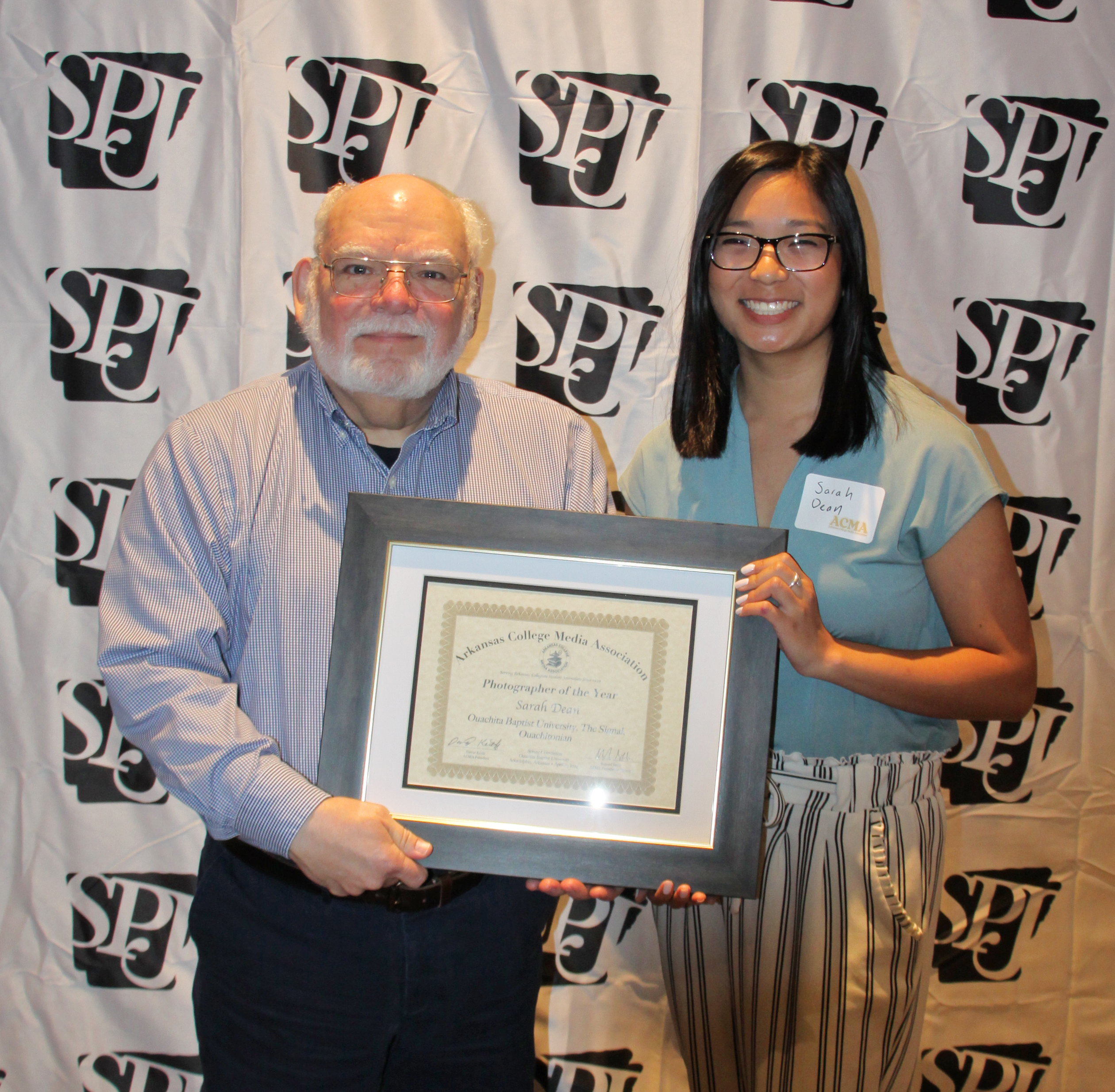
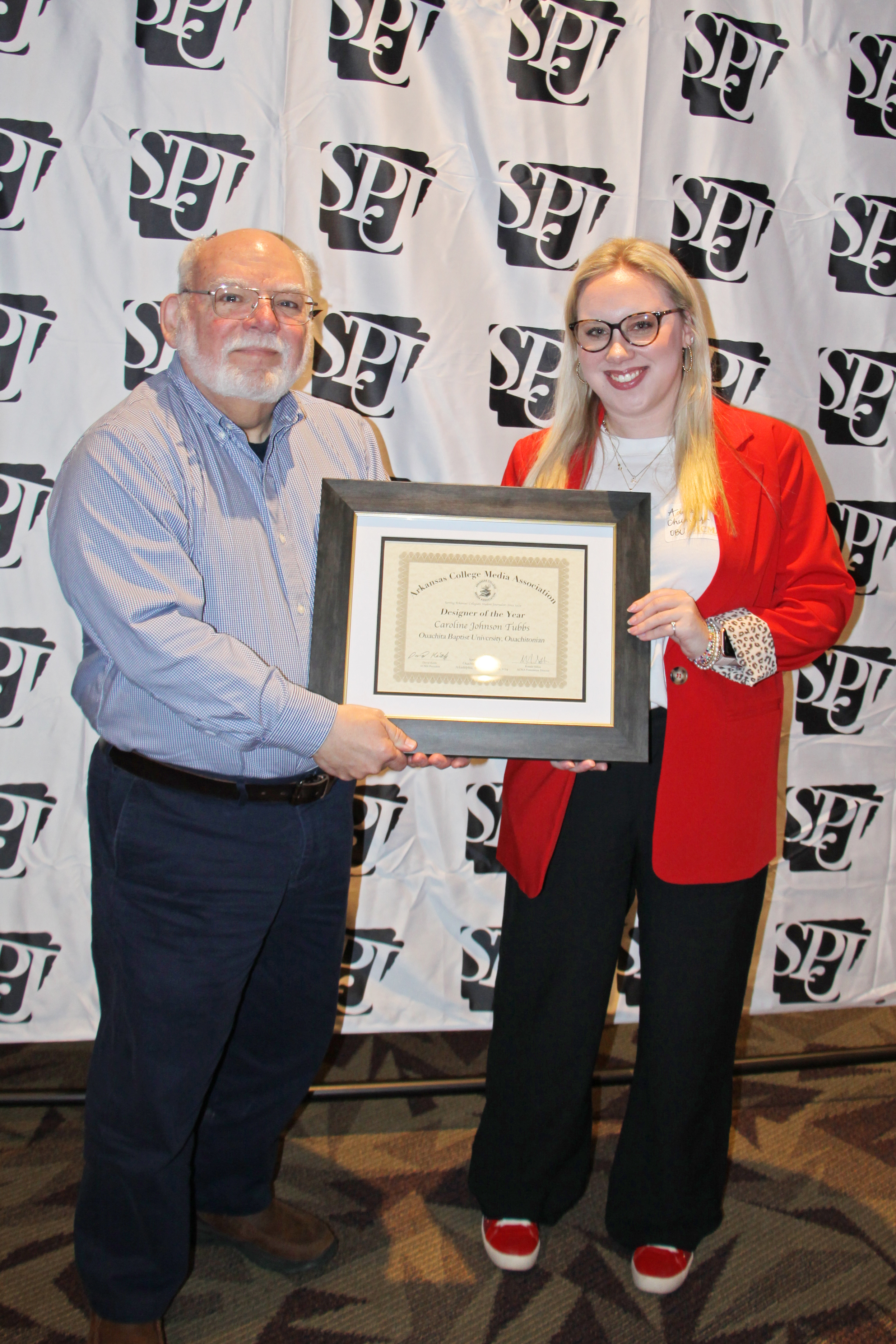
Sarah Dean, named Photographer of the Year, and Caroline Johnson Tubbs, named Designer of the Year, both of Ouachita Baptist University, were additional recipients of $250 scholarships. This year, no winner was awarded in the Yearbook Editor of the Year category.
Sarah Dean, named Photographer of the Year, and Caroline Johnson Tubbs, named Designer of the Year, both of Ouachita Baptist University, were additional recipients of $250 scholarships. This year, no winner was awarded in the Yearbook Editor of the Year category.
Saturday, March 16, 2024 | 10:30 a.m. to 11:45 a.m.
Join us for an informative workshop designed specifically for journalists on understanding legal documents. In this workshop, two seasoned journalists, Debrah Hale-Shelton with the Arkansas Times and John Lynch with the Arkansas Democrat Gazette, will share their expertise and insights by using their own work as examples to demonstrate how legal documents can be effectively utilized in reporting.
Debra Hale-Shelton is a veteran journalist who currently reports for the Arkansas Times. She previously was a reporter and briefly an opinion columnist for the Arkansas Democrat-Gazette where she twice received the I.F. Stone Award for investigative journalism. In 2017, the American Journalism Historians Association named her Journalist of the Year. She also has worked as a reporter and editor for The Associated Press, mostly in Chicago but also in Little Rock, Atlanta and Kentucky. Hale-Shelton has interviewed past and future presidents, death-row inmates, and more than a few people who spoke on condition of anonymity. For 6 1/2 years, she taught English at Earle, Arkansas where she helped students start a school newspaper, The Bulldog Express.
Raised in West Texas on a diet of raw rattlesnake venom, polecat eggs and Saltine crackers, John Lynch, courthouse reporter for the Arkansas Democrat-Gazette, quickly grew strong enough to begin his never-ending battle for truth, public records and a free lunch. Since Halloween 1989, he has worked for one radio station and four newspapers in three states, including 19 years in this one. He asks that you stop using the phrases, “in connection with,” “shallow grave,” “speaking out,” “breaking his/her/their/silence,” and “it’s official.” And, please abandon “allegedly” in all its forms, except as a last resort.
Don’t miss this unique opportunity to learn from two seasoned journalists who will demonstrate the practical application of legal documents in their own stories. Join us for this enlightening workshop and enhance your ability to navigate and utilize legal documents in your journalistic endeavors.
From listener to practitioner, future educator and business owner Odette Henry’s passion for broadcast keeps propelling her to new heights
March 1, 2024
By Odette Henry | Contributor
JONESBORO, Ark. – As a young girl growing up in rural Jamaica, television was a luxury my parents could not afford. Radio was my only device and I tuned in at every possible moment. My favorite times were weekdays after school when the island’s top DJ and #1 program could be heard on almost everyone’s radio. The “Two to Six Supermix” and its host Barry Gordon, aka “Barry G”, fueled my love and appreciation of broadcasting.
Odette Henry
I sometimes reminisce about those days, and still feel the excitement at discovering the power of broadcasting. I realized then that Barry G not only had an entire island listening to him but more importantly, he could teach, inspire, change lives, impact decisions, and make a difference to countless individuals in many ways. At 16, I decided I wanted to do that too! I knew nothing about Marshall McLuhan then, but my migration to Toronto put me on the path to studying his concepts.
In 1990, after living in Canada for a few years, I was accepted to Ryerson’s Media program and chose Broadcast Television as my major. I completed my BA in 1994 and have worked in several roles on camera and behind the scenes.
My recent role as Team Manager, Producer & Director of Media Ministry at Pat Francis Ministries was an amazing 18-year journey. I began as Production Assistance and on my first day had the pleasure of working with Bishop TD Jakes media team to telecast worship between our two churches. Over the years, I transitioned effortlessly from PA, Shader, Director/Switcher, Producer, Team Manager, and most recent Deacon of Media Ministry. I love the opportunity to direct live TV and creatively communicate the story to the audience! Additionally, I relish the opportunity to lead, train, coach, and inspire a team of new and experienced broadcasters.
At this juncture, I’m energized by the possibilities of realizing the dream of steering future staff of my own media company, OAR Media Groupe. My goals also encompass guiding future college students to develop their knowledge and skills in media. I’m always eager for opportunities to gain greater insights and knowledge in media science and applicable theories. I will complete my Master of Science in Mass Communications in 2025 and begin PhD studies that same year.
As a Broadcaster, I am dedicated to making a difference by sharing information and knowledge that inspire and empower others to consistently create their own stories.
-30-
NOTE: Odette Henry is currently pursuing a master of science degree in mass communications at Arkansas State University in Jonesboro.
Faith became a journalist after witnessing the damage of Hurricane Katrina in 2005. After seeing the events unfold on television, she realized how important storytelling was for those in need and vowed to do the same for her own community.
THV11 News Anchor Faith Woodard
Faith attended Georgetown University in Washington, D.C. where she received her bachelor’s degree in English, and worked at her campus news station covering many notable events.
But beyond shooting the news, Faith can also shoot the basketball. She was a four year starter and captain on the Georgetown Women’s Basketball Team, a Parade-All American and McDonald’s All-American nominee in high school, and a two-time state champion track runner in high school.
She is also a graduate of Columbia University’s Graduate School of Journalism. Faith received her Master’s degree and received honors in multiple courses at Columbia. She was also president of the Association of Black Journalists. While still in school, Faith was a sideline reporter for SportsNet New York, as well as the Big East Digital Network.
After graduating from Columbia, Faith worked as an Anchor and Reporter at WBOC-TV in Salisbury, Maryland. While there, she covered breaking news, the government shutdown, tornados that devastated her local community, NASA launches, offshore-drilling, the opioid crisis, and political scandals.
From there, Faith worked as an Evening Anchor at CBS4 in the Rio Grande Valley in Texas. Here, she covered breaking news and immigration heavily. This included presidential, gubernatorial and congressional visits to the U.S. and Mexico border. Faith has a heavy background in Tile 42 and the Migrant Protection Protocols program. She also covered the Texas winter freeze, and the Uvalde mass shooting.
Faith is the proud daughter of Sterlin and Lora Woodard. In her spare time, Faith enjoys spending time with family, shopping, reading, going to the beach, or listening to her favorite musical artist, Stevie Wonder.
Brandon Tabor, the on-air host for the “Morning Edition” at KASU-FM, has been named news director, announced Mark Smith, station manager. The National Public Radio (NPR) member station is licensed to Arkansas State University (A-State). Tabor earned his Bachelor of Arts (BA) in mass media degree from Henderson State University and his Master of Science in Mass Communications (MSMC) from A-State. While in the master’s program, Tabor joined the Arkansas State Association of Black Journalists.
He also was among the team of volunteers who helped launch the low-power FM community station KLEK, where he continues to volunteer. During his time at KASU, Tabor led the station’s conversion to a new content management system, which enhanced the design and functionality of the station’s website. KASU was among the first stations to adopt the new system, and his work on the station’s website has been used as a model for other NPR member stations using the same system.
Tabor has also received a first-place award from the Associated Press for his work on a sports feature, and he continues to produce relevant and engaging news content for the station. Two of his reports following the recent tornado in Wynne have been shared nationwide on NPR newscasts. Tabor joined the KASU staff in November 2015 as a content producer and an on-air co-host for the 5-9 a.m. “Morning Edition” shift. Tabor is a native of Wynne, but he has lived in Jonesboro since 2008, where he now makes his home with his wife, Allie. During his undergraduate studies at Henderson State University, Tabor worked for KSWH-LP FM and Henderson TV. He was also a member of the Henderson marching band.
Brandon Tabor News Director | KASU Public Radio 91.9 FM Arkansas State Universitym: 870.627.3280 p: 870.972.2701 i: 870.972.3812 PO Box 1930 State University, AR 72467
Black History Month Spotlight: Pine Bluff Commercial Senior Reporter I.C. Murrell
I.C. Murrell/The Pine Bluff Commercial
I.C. Murrell (“mer-ELL”) began his fourth year as senior reporter and eighth year overall at The Commercial in January 2024. The Dollarway High School graduate is serving his second stint at his hometown newspaper, after working as sports editor from 2011-15.
Murrell is a 10-time winner of first-place awards in statewide and company-wide journalism contests. In 2023, he won first-place awards from the Arkansas Press Association for Best Picture Page/Photo Essay among smaller dailies and Best Coverage of Education among all dailies.
While Murrell covers a wide variety of topics at the Commercial, education has moved to the forefront of his topics of interest. His mother Diane was a longtime home economics teacher and administrator, and he honors her memory by keeping readers informed on the latest developments impacting public schools and higher-learning institutions in Jefferson County.
That is not to say his background as a sports reporter is no longer of importance to him. He still hustles to sports venues and keeps readers connected to their local teams while documenting action with his camera.
Murrell has previously been honored with induction into the University of Arkansas at Monticello African American Alumni Elite hall of fame in 2021. His work has also earned him recognition from the Texas Association of School Boards and the Press Club of Southeast Texas, among other organizations.
He has been a professional reporter since 2000 and a daily newspaper reporter since 2003. He holds membership in the Central Arkansas Association of Black Journalists.
He holds associate and baccalaureate degrees from UAM.
Little Rock, Ark. –Imagine you’re sitting at your desk or workstation in your newsroom.
You’re writing a story on deadline, concentrating on the monitor in front of you, when you hear a commotion out in the hallway.
At first you aren’t sure what the loud voices are saying. You try and tune out the boisterous conversation, and start to re-read your last sentence when suddenly a sharp crack – BANG – sounds in the hallway.
There’s a wail, then the succession gunshots and screams begin.
What do you do?
Do you have an escape route? Has your company ever discussed what to do in an active shooter situation? Have you ever seriously considered such a scenario while sitting in your office? Or how about while sitting at a school board meeting, or a city council gathering, or while covering a crime scene investigation?
Chances are you answered no to some, and maybe even all, of the above questions.
Workplace violence can occur in any employment setting, including newsrooms, whether they be at newspapers or television stations.
According to the 2019 report Indicators of Workplace Violence, compiled by the Bureau of Justice Statistics, the Bureau of Labor Statistics and the National Institute for Occupational Safety and Health and released in 2022, nearly 18,000 persons were killed at work, on duty, or in violence that was work-related over a 27-year period from 1992 to 2019.
According to the study, an annual average of 1.3 million nonfatal workplace violent victimizations occurred during the combined 5 years from 2015 to 2019, based on data from BJS’s National Crime Victimization Survey.
In June of 2018 a local resident, unhappy about having his police charges published in the Capital Gazette, a newspaper serving Annapolis, Md., brought a shotgun into the newsroom and killed five people.
The gunman, Jarrod Ramos, was doubly annoyed that his defamation lawsuit against the newspaper was dismissed in court. The paper had published an article in 2011 about Ramos being put on probation for harassing an acquaintance from high school via social media and email.
Allegedly Ramos sent angry letters and threats to the newspaper after the lawsuit was dismissed, but no legal action was taken by the newspaper after the threats were received.
So, on the afternoon of June 28, Ramos showed up with a 12-gauge Mossberg to register his complaint in blood. Five people, including Rob Hiaasen, brother of noted novelist Carl Hiaasen.
In 2021, Ramos was found guilty and sentenced to five life terms plus 345 years in prison.
But since 2018, three other American journalists have been murdered in separate incidents – Aviva Okeson-Haberman in Kansas City, Mo., Jeff German in Las Vegas and Dylan Lyons in Pine Hills, Fla.
Time Magazine reported in 2019 that statistically, the average American has a greater risk of dying from heart disease or cancer than from a firearm, according to the National Safety Council.
Auto accidents also kill about the same number of people in the U.S. as guns do each year, according to CDC statistics.
However, people in the U.S. are 25 times more likely to die from gun homicide than people in other wealthy countries, according to a 2016 study in the American Journal of Medicine.
Journalists are in a unique position. Not only are they subject to the random everyday workplace violence spawned by divorces, jealousy, terminations, robberies and disgruntled customers. Journalists also as part of their job often cover and expose facts about people that the subjects would prefer not to have exposed. Journalists go to the scenes of shootings, accidents, robberies, fires, floods and earthquakes. Besides the environmental dangers that can be posed in covering the news, there is also always the human factor which can result in tragedy.
Florida TV reporter Dylan Lyons was killed on the job while covering the murder of a woman in Pine Hills, a community just outside of Orlando. He was there filming when the suspect returned to the scene and shot Lyons and his cameraman Jesse Walden. Walden survived.
The five victims of the Annapolis mass shooting were in their work space, where it was literally just another day at the office – until it wasn’t.
After the shooting in Maryland, I decided to put together a presentation for the Arkansas Press Association on self-defense for journalists, which I finally got completed just in time for the COVID-19 pandemic to shut everything down.
Besides being a career journalist (I’m currently the editor of The Saline Courier in Benton, Ark.) with nearly 30 years’ experience, I also had a decade of Human Resources experience during which I encountered numerous violent workplace situations that could have escalated but, thankfully, did not result in any deaths.
I also am a martial artist, with four decades of study in a wide range of disciplines, and have taught women’s self-defense classes and assisted in teaching law enforcement self-defense classes over the years, so I thought I could offer some insights to my co-workers on staying safe both in the newsroom and out on the streets.
“Usually, self-defense is considered survival against unprovoked attacks by human attackers.
In actuality, self-defense is so much more nuanced than that. Preserving one’s life is far more complex than a few hand strikes or gunshots,” writes podcaster Serge Antonin on the website blackandwhiteandthinbluelines.com.
The essence of self-defense is awareness. Being aware of your surroundings both inside your newsroom and out on the street covering a story is the first, and biggest, step you can take toward being safe.
Antonin lists four essential types of awareness:
Situational Awareness — People often create circumstances that adversely affect them. Understanding this and the hazards created by strangers is paramount when considering self-defense.
Environmental Awareness — Understanding that different environments hold different perils is crucial.
Preparational Awareness — Possession of the proper tools, training, and mindset to survive an environment or live adversary is very important.
Capability Awareness — The accurate estimation of one’s abilities is critical.
Just as your company probably requires you to wear a reflective vest when covering traffic accidents, you should think of your awareness as your internal reflective vest and you should put it on whenever you go out to cover a story, especially one that involves violent crime.
Situational awareness requires you to see what is happening around you. It also requires that you listen to your gut instincts – If your little voice is telling you something is wrong, it probably is. Is that loud argument two tables over just rowdy friends or is it about to erupt in gunfire? Is the person who just walked into your office with his flow chart explaining how the President is trying to read his thoughts harmless?
Environmental awareness seems common sensical if you’re covering an ice storm or a wild fire, but it also applies to your workplace and home. Right now, look at your surroundings. If you spotted a shooter walking toward you, what would you do? Where would you go? Do you have an escape route? A second doorway or a window?
Preparational awareness is where we generally fall down as a profession, and as a society. Often, the thinking is the police will be there to handle any serious incidents, but sadly in most cases the police arrive after the shooting has begun, not before. Basic self-defense teachings aren’t part of most workplaces unless you are working in law enforcement or security, but a basic common-sense self-defense course, whether through the NRA or a concealed-carry instructor or a realistic self-defense program, such as Krav Maga, are really helpful. Often, police departments will offer basic courses to the public, and it would not be a bad idea to have one such course offered annually in newsrooms.
Capability awareness is best summed up by Dirty Harry Callahan’s edict delivered in the 1973 film Magnum Force: “A man’s got to know his limitations.”
The basic motto for active shooter situations is Run, Hide, Fight – and you should be able to do a little of all three. As horrible as active shooter drills in elementary schools sound, they are teaching skills that most adults who don’t have a military service background haven’t cultivated. Wherever you are, basic self-defense awareness includes finding the quickest way to the closest exit, looking for a safe barrier to duck behind, and having a basic idea of how to fend off an attacker.
Ultimately, defensive awareness should extend to all parts of one’s life. Living defensively doesn’t mean being paranoid or fearful. Tornadoes happen, and if you live in Arkansas, chances are you have a tornado close encounter story to tell. But you probably don’t run to the nearest closet every time it rains.
In the same fashion, being aware of the potential for violence and learning to pay attention to one’s surroundings can save lives – not only yours, but also those around you.
Randal Seyler is an Arkansas native and a career journalist, serving as editor for 17 different newspapers in four states since taking his first editor’s job in 1986. Currently he is managing editor of The Saline Courier in Benton, Ark. He has also studied a variety of martial arts over the past 45 years, and has taught karate and Tai Chi for over 30 years to hundreds of students. He is the author of Heads Up! Self Defense for Journalists. He is available for self-defense seminars and workplace violence prevention training. For more information, contact Randal at ransey303@gmail.com.
All professional and student journalists, freelancers and communications professionals residing in Arkansas, Louisiana, Mississippi, Missouri, Oklahoma, Tennessee and Texas can submit entries or have entries submitted on their behalf by organizations that published or broadcast their work. Authors who reside in the contest states may submit work published or broadcast outside those states.
ALL ENTRIES MUST HAVE BEEN PUBLISHED OR BROADCAST IN CALENDAR YEAR 2023.
ENTRY DEADLINE: 11:59 P.M. CENTRAL, MARCH 11, 2024
Entries may be submitted in more than one category, but a separate entry fee is required for each category.
Any significant challenges or corrections to an entry must be noted with the entry. Failure to do so will result in disqualification of the entry.
All categories are open to Spanish language journalists. An English translation is not required, but it would be helpful.
Cover letters and supporting material are required only in conjunction with nominations for the following awards: Student Special Project, Student Journalist of the Year, Public Service, Community Journalism, FOI, Outstanding New Journalist and Diamond Journalist of the Year. Entrants in other categories may submit cover letters or supporting material at their discretion but should keep them brief.
Please ensure entry URLs remain valid through June 30, 2024, to accommodate judging and awards presentation.
Contest administrators reserve the right to combine entries in the same category from different platforms or circulation groups if an insufficient number of entries make the category non-competitive.
You DON’T have to be a member of the Society of Professional Journalists to enter, but members get a discount on entry fees. SPJ members must provide their membership number in order to qualify for the discount. You can join SPJ by submitting an application here. We suggest submitting entries after your SPJ membership has been confirmed.
ENTRY FEES
SPJ members: $10 per entry.
To claim the member fee, you must supply your SPJ member number (in the entry platform’s comments box). A team entry may claim the fee if at least one team member is an SPJ member. That person’s name and SPJ member number must be listed in the comments box.
Nonmembers: $20 per entry.
Student SPJ members: $5 per entry. Provide your member number.
Student nonmembers: $10 per entry.
No fees will be refunded.
HOW TO ENTER
The Diamond Journalism Awards uses the Better BNC contest management platform for entries and judging.
Welcome to the revamped 2024 Diamond Journalism Awards. We’ve added several new categories this year and reorganized categories by overall divisions for easier navigation. For entry rules go here.
The divisions:
DIVISION 1 – PRINT/ONLINE recognizes reporting and storytelling via the written word.
DIVISION 2 – TELEVISION recognizes visual reporting and storytelling via televised media.
DIVISION 3 – RADIO/AUDIO recognizes spoken-word reporting and storytelling via radio or podcast.
DIVISION 4 – SPECIAL TOPICS recognizes reporting and storytelling on certain topics from entrants regardless of medium.
DIVISION 5 – VISUAL JOURNALISM recognizes photography, graphics and design regardless of medium.
DIVISION 6 – COMMUNICATIONS recognizes reporting and storytelling by a public relations, communications or marketing professional or group regardless of medium or business affiliation.
DIVISION 7 – STUDENT JOURNALISM recognizes reporting and storytelling by student journalists regardless of medium.
DIVISION 8 – CRAFT ACHIEVEMENT recognizes excellence in the craft of news presentation.
DIVISION 9 – DIAMOND AWARDS recognizes outstanding work regardless of the medium for community journalism, public service reporting, freedom of information reporting, best new journalist, best student journalist and journalist of the year.
DIVISION 1: PRINT/ONLINE
(Entries accepted from print and online-only publications)
BREAKING NEWS – For clear, accurate and engaging coverage of a single, unexpected news event by an individual or team. Judges will consider deadline pressure and the complexity of the subject. Submit up to three articles from same-day coverage, including sidebars or related multimedia content.
GENERAL NEWS – For non-breaking news coverage. It may include planned coverage of a single event or in-depth reporting. Submit up to three articles and any related multimedia content.
CONTINUING COVERAGE – For ongoing coverage of a topic or significant event over time, demonstrating solid reporting and presentation with complexity and perspective. Submit up to five stories along with any related multimedia content. Entries may include a mix of story types.
ENTERPRISE/IN-DEPTH REPORTING – For coverage that reflects initiative, ingenuity, use of sources and/or special research to dig deeper or capture more complexity than a typical news story. Submit a single story or a series of up to three stories and any related multimedia content. Entry can be by an individual or team.
INVESTIGATIVE REPORTING – For reporting that demonstrates initiative, persistence and resourcefulness in pursuing information that is restricted, hidden by officials or not readily available and is of public interest and significance. COVER LETTER REQUIRED, explaining reporting process and impact or results. Submit one story or a series of no more than six stories and any related multimedia content.
EXPLANATORY REPORTING – For reporting and writing that makes clear significant stories and complex situations that deepen understanding of a subject or focus on subjects covered minimally or not at all by most media. Submit one story or a series of no more than six stories and any related multimedia content.
EDITORIALS – For opinion writing representing a news organization’s position on a topic or issue. Judges will consider the value to the community, writing style, reasoning, originality and reader interest. Submit three editorials as one entry.
COMMENTARY – For commentary or analysis by an individual. News-oriented blogs are also eligible. Judges will consider the quality of expression, clarity and originality. Submit three columns as one entry.
FEATURES – For individual storytelling excellence. Judges will consider the use of narrative, humor or drama, style, creativity, clarity and suitability of the writing to the subject. Submit one story.
PROFILES – For reporting that depicts the character and personality of a story subject. Submit one story.
SPORTS – For coverage of any sport or athletic endeavor. Judges will consider clarity and style. Submit a single story or no more than three stories representing continuing coverage of a single topic.
SPORTS FEATURE – For outstanding storytelling about athletic participants or a sport itself. Submit a single story.
ARTS & ENTERTAINMENT COVERAGE – For coverage of the arts, entertainment or other cultural news. Entry may include news, profiles and features. Judges will consider the quality of the writing and presentation and, where appropriate, analysis. Submit up to three stories on a single topic or various topics.
CRITICISM/REVIEWS – For writing demonstrating a journalist’s competence in evaluating performance, restaurants, books, recorded music or other cultural events or entities. Submit three pieces by one author as one entry.
EDUCATION – For coverage of schools, teaching or education-related topics by an individual, team or staff. Submit up to five samples and any related multimedia content as one entry.
POLITICS – For coverage of public issues, elections, political campaigns, candidates, campaign finance or government by an individual, team or staff. Submit up to five stories and related multimedia content as one entry.
SPECIAL SECTION/NICHE PUBLICATION – For a niche publication or special section devoted to a single topic. Judges will consider the depth of coverage, presentation, and quality of writing. Submit one section or niche publication.
DIVISION 2: TELEVISION
(Entries accepted from broadcast and cable TV outlets or other video outlets)
GENERAL NEWS GATHERING ENTRY REQUIREMENTS:
The original video and submission length may be at most 10 minutes for single news entries. Eligible multipart news series entries may include two (2) but at most five (5) separate reports from the series. The total submission time limit for news series entries may be at most 15 minutes.
BREAKING NEWS – For coverage of a single unexpected news event that highlights urgency. Submit a video from same-day coverage. Submission length must not exceed 10 minutes.
CONTINUING COVERAGE – For ongoing coverage of a topic or significant event over time. Entry should not be longer than 15 minutes.
EXPLANATORY REPORTING – For coverage of a complex issue that clearly explains a topic or event from start to finish. Entry should not be longer than 15 minutes.
INVESTIGATIVE – For a single report or series that focuses on one subject matter and includes extensive research. Entry should not be longer than 15 minutes.
NEWS FEATURE – For a single story that includes a personal, emotional or creative slant beyond just gathering facts. Entry should not be longer than 15 minutes.
ARTS & ENTERTAINMENT – For general entertainment and/or performing arts coverage. Entry should not be longer than 15 minutes.
CRIME/JUSTICE – For coverage of crime, victims or justice-related topics. Entry should not be longer than 15 minutes.
PROFILES – For coverage of an individual who has overcome obstacles or made significant contributions to their community. Entry should not be longer than 15 minutes.
EDUCATION – For coverage of schools, teaching or education-related topics. Entry should not be longer than 15 minutes.
POLITICS – For coverage of political, civil or government-related topics. Entry should not be longer than 15 minutes.
WEATHER – For coverage of a weather-related event. Entry should not be longer than 15 minutes.
SPORTS STORY– For coverage of a single sporting event, athletes, coaches and other related topics. Entry should not be longer than 15 minutes.
SPORTS PROGRAM – For a daily or weekly sports program, which can be live or pre-recorded. Maximum run time: 30 minutes.
NEWSCAST – For excellence in a regularly scheduled newscast. Judges will consider overall content, presentation, enterprise, writing, format, teases, etc. NOTE: This award is for producers only. Please remove all commercial breaks with 2 seconds of black between each break. For newscasts exceeding 30 minutes, entrants may submit up to 3 excerpts.
DIVISION 3: RADIO/AUDIO
(Entries accepted from broadcast radio, podcasts and other outlets producing audio)
BREAKING NEWS – For clear, accurate and engaging coverage of a single unexpected news event by an individual or team. Judges will consider deadline pressure and the complexity of the subject. Submit audio from same-day coverage. Submission length must not exceed 15 minutes.
GENERAL NEWS – For non-breaking news coverage. It may include planned coverage of a single event or in-depth reporting. Submit audio from a single story. Submission length must not exceed 15 minutes.
CONTINUING COVERAGE – For ongoing coverage of a topic or significant event over time, including several reports over some time. Entry should not be longer than 15 minutes.
ENTERPRISE/EXPLANATORY REPORTING – For coverage that reflects initiative, ingenuity, use of sources and/or special research to dig deeper or capture more complexity than a typical news story. Submit audio from a single report or a series of reports not longer than 30 minutes in total. Entry can be by an individual or team.
INVESTIGATIVE REPORTING – For reporting that demonstrates initiative, persistence and resourcefulness in pursuing information that is restricted, hidden or not readily available and is of public interest and significance. COVER LETTER REQUIRED, explaining reporting process and impact or results. Submit a single piece or a series on the same topic with a maximum combined run time of 60 minutes.
FEATURES – For individual storytelling excellence. Judges will consider the use of narrative, humor or drama, style and creativity beyond just gathering facts. Submit one story of not more than 15 minutes.
PROFILES – For reporting that depicts the character and personality of a story subject. Submit one story of no more than 15 minutes.
SPORTS – For coverage of any sport or athletic endeavor, including features about athletes or a specific sport. Judges will consider clarity and style. Submit audio of no more than three reports covering a single topic with a run time of 15 minutes or less.
ARTS & ENTERTAINMENT – For coverage of the arts, entertainment or other cultural news. Entry may include news, profiles and features. Judges will consider the quality of the writing and presentation and, where appropriate, analysis. Submit up to three stories on a single topic or various issues with a total run time of not longer than 15 minutes.
EDUCATION – For coverage of schools, teaching or education-related topics by an individual or team. Submit up to five audio pieces with a run time of not more than 15 minutes.
POLITICS – For coverage of public issues, elections, political campaigns, candidates, campaign finance or government by an individual or team. Submit up to five audio pieces with a total run time of not more than 15 minutes.
DIVISION 4: SPECIAL TOPICS – ALL MEDIA
(Entries accepted from any medium)
HEALTH – For reporting clearly on health, including medicine, community health and health policy, and the health effects of COVID-19 by an individual or team. Print/online: Submit three to five stories and related multimedia content as one entry. TV/Radio/Audio: An entry should not exceed 15 minutes.
ENVIRONMENT/SCIENCE – For reporting by an individual or team on environmental issues, including climate change; or science, including technology, and the impacts on individuals and society. Print/online: Submit three to five stories and related multimedia content as one entry. TV/Radio/Audio: An entry should not exceed 15 minutes.
RELIGION – For reporting by an individual or team on religion, issues of faith or spirituality. Print/online: Submit three to five stories and related multimedia content as one entry. TV/Radio/Audio: An entry should not exceed 15 minutes.
BUSINESS – For coverage of business, finance or consumer issues by an individual, team or staff. Print/online: Submit three to five stories and any related multimedia content. TV/Radio/Audio: Submit up to five audio pieces with a maximum run time of 15 minutes.
DIVISION 5: VISUAL JOURNALISM & DESIGN
(Entries accepted from any medium)
BREAKING NEWS PHOTOGRAPHY – For photojournalism produced on deadline. Judges will consider deadline pressure, the complexity of the subject and visual presentation. Submit photos with cutlines from up to three stories as one entry, but no more than six images. Be sure to include the accompanying story or link to the story.
GENERAL NEWS PHOTOGRAPHY – For photojournalism by an individual for any non-deadline news event. Submit a single photo with a cutline/caption. Link to or include accompanying story – if any.
FEATURE PHOTOGRAPHY – For feature photography by an individual. Submit a single photo with a cutline/caption. Link to or include the accompanying story, if any, or contextual information.
PHOTO SPREAD/ESSAY – For a group of photographs on a single theme published as part of a single story or as a stand-alone layout. Submit no more than six images with cutlines. Link to or include the accompanying story or contextual information.
GRAPHICS/ILLUSTRATIONS – For infographics, illustrations or data visualizations. Submit up to three examples by an individual or team as one entry, including the associated stories or links to them online.
FRONT PAGE DESIGN-NEWSPAPERS – For layout that enhances and improves audience experience and engagement. Submit PDFs or links of up to three pages as one entry.
COVER DESIGN-MAGAZINES – For layout that enhances and improves audience experience and engagement. Submit PDFs or links of up to three pages as one entry.
WEB DESIGN – For presentation that enhances and improves audience experience and engagement. Submit PDFs or links of up to three pages as one entry.
DIVISION 6: COMMUNICATIONS
(Entries accepted from marketing and PR firms and corporate communications teams)
PRESS RELEASE WRITING – For excellence in press release writing by an individual published or distributed by a business or organization. Submit a PDF or link to a single press release.
FEATURE WRITING – For excellence in feature writing by an individual published or distributed by a business or organization. Submit a PDF or link to a single feature story.
PHOTOGRAPHY – For excellence in photography by an individual published or distributed by a business or organization. Submit a jpeg, png, PDF or link to a single photo.
CAMPAIGN – For excellence in the creation and execution of any advertising, marketing or promotional campaign by an individual or group that was published or distributed to promote a business or organization’s specific objectives. This includes social media, digital, print, multimedia, advertising, internal promotion, direct mailing, printed booklets, etc. or any combination of these items. Submit PDFs or links to at least three pieces of the campaign and a description of the campaign’s goals, execution details and any available results.
NEWSLETTER – For excellence in newsletters for corporations, nonprofits or other organizations. Submit up to three newsletters via links or PDFs with confirmation of send.
PROMOTIONAL PUBLICATIONS – For excellence in publications intended for an audience other than an internal audience. Submit one complete publication via PDF or link.
DIVISION 7: STUDENT JOURNALISM – ALL MEDIA
STUDENT-SPECIAL PROJECTS – For special projects that show exemplary reporting, writing, photography or videography. These should be student-generated and not part of an ongoing university-sponsored project. COVER LETTER REQUIRED.
STUDENT-BREAKING NEWS – For clear, accurate and engaging coverage of a single, unexpected news event by individuals or teams. Judges will consider deadline pressure and the complexity of the subject. Submit up to three articles, audio or video from same-day coverage, including sidebars or related multimedia content.Audio and video clips should not exceed 15 minutes.
STUDENT-GENERAL NEWS – For non-breaking news coverage. It may include planned coverage of a single event or in-depth reporting. Submit up to three articles, audio or video, including sidebars or related multimedia content. Audio and video clips should not exceed 15 minutes.
STUDENT-FEATURES – For individual storytelling excellence. Judges will consider the use of narrative, humor or drama, style, creativity, clarity and suitability of the content to the subject. Submit one story. Audio and video entries should not exceed 15 minutes.
STUDENT-SPORTS – For coverage of any sport or athletic endeavor regardless of platform. Judges will consider clarity and style. Submit a single story or no more than three stories representing continuing coverage of a single topic. Audio and video clips should not exceed 15 minutes.
STUDENT-EDITORIALS – For opinion writing representing a news outlet’s position on a topic or issue. Judges will consider the value to the community, style, reasoning, originality, and audience interest. Submit three editorials as one entry. Audio and video entries should not exceed 15 minutes.
STUDENT-COMMENTARY – For commentary or analysis by an individual. Blogs are eligible. Judges will consider the quality of expression, clarity, and originality. Submit three pieces as one entry. Maximum run time for video or audio: 15 minutes.
STUDENT-ARTS & ENTERTAINMENT REPORTING – For coverage of arts, entertainment, restaurants and other cultural news. Entry may include columns, profiles or features. Judges will consider the quality of the content and presentation and, where appropriate, analysis. Submit three samples as one entry. Maximum run time for video or audio: 15 minutes.
STUDENT-CRITICISM/REVIEWS – For analysis demonstrating a journalist’s competence in evaluating performances, restaurants, books, recorded music, motion pictures or other cultural events or entities. Submit three samples as one entry. Maximum run time for video or audio: 15 minutes.
STUDENT-BUSINESS – For coverage of consumer issues, business or finance, including the college athletics industry and the finances of institutions of higher learning. Judges will consider clarity and readability. Submit a single story or no more than three stories representing continuing coverage of a single topic. Maximum run time for video or audio: 15 minutes.
STUDENT-EDUCATION – For coverage of education and academic policy, including institutions of higher education, teacher training and educational research. Judges will consider clarity and thoroughness. Submit three stories as one entry. Maximum run time for video or audio: 15 minutes.
STUDENT-NEWS PHOTO – For photojournalism by an individual of breaking or general news. Judges will consider visual presentation and photographic techniques. Submit one photo with an accompanying cutline/caption or video clip of not more than five minutes. Please include the accompanying story or link the story.
STUDENT-FEATURE PHOTO – For feature photography by an individual. Judges will consider the complexity of the subject and visual presentation. Submit one photo with an accompanying cutline/caption. Please include the accompanying story or link the story, if any.
STUDENT-PHOTO SPREAD/ESSAY – For a group of photographs on a single theme published as part of a single story or as a stand-alone layout. Submit the page or up to six images with cutlines/captions and an explanation of the context or the accompanying story or text. Links are acceptable.
STUDENT-PHOTO PORTFOLIO – For photography that shows the work of a single photographer. Submit three to five photos with cutlines/captions.
STUDENT-GRAPHICS/ILLUSTRATIONS — For infographics, illustrations or data visualizations. Submit three to five examples by an individual or team as one entry, including the associated stories or links to them online.
STUDENT-PAGE DESIGN – For presentation that improves audience experience and engagement in print or online. Submit three examples as one entry.
DIVISION 8 – CRAFT ACHIEVEMENT
(Recognizes excellence by an individual engaged in the craft of news presentation)
OUTSTANDING NEWS ANCHOR – Based on coverage of several topics, credibility, delivery, and overall talent. Entry can include segments from regular newscasts, news specials, breaking news, etc. Entry should be no longer than 15 minutes, with two seconds of black between each segment.
OUTSTANDING METEOROLOGIST – For regular weather segments or coverage of weather events. Entry should be no longer than 15 minutes, with two seconds of black between each segment.
OUTSTANDING SPORTS ANCHOR – For regular sports segments or coverage of special sports events. Entry should be no longer than 15 minutes, with two seconds of black between each segment.
OUTSTANDING TV NEWS WRITER – For excellence in news writing by an individual. Submit three to five excerpts as one entry. Maximum run time is 15 minutes, including two seconds of black between segments. Please include scripts.
OUTSTANDING TV EDITOR – For excellence in video editing by an individual. Submit three to five excerpts as one entry. Maximum run time is 15 minutes, including two seconds of black between segments.
OUTSTANDING PRINT/ONLINE EDITOR – For excellence in editing by line or copy editors. Submit three to five examples of how editing improved a reporter’s work. If possible, include original work or proof of edits for comparison.
OUTSTANDING TV PHOTOGRAPHER – For excellence in TV photography by an individual. Submit up to five excerpts as one entry. Maximum run time is 15 minutes, including two seconds of black between segments.
OUTSTANDING STILL PHOTOGRAPHER – For photography that shows the work of a single photographer. Submit or link three to five photos with cutlines/captions as one entry.
OUTSTANDING RADIO/PODCAST HOST – For excellence in program or podcast hosting. Submit no more than five excerpts showing the host’s work with two-second breaks between excerpts.
DIVISION 9 – DIAMOND HONORS – ALL MEDIA
(Entries accepted from all media)
CHARLOTTE TILLAR SCHEXNAYDER PUBLIC SERVICE AWARD – For journalism that seeks to benefit society through extensive coverage of an issue facing a community, state or region. Awarded in honor of the late Charlotte Schexnayder, journalist, small-town newspaper publisher and Arkansas legislator. Entry MUST INCLUDE A COVER LETTER providing background context and results, if any. Judges will consider the issue’s significance, journalistic initiative, presentation, and results, if any. Submit five to seven articles — stories and opinion pieces. Maximum total run time for audio and video entries: 30 minutes.
ROBERT S. MCCORD FOI AWARD – For coverage that focuses on the public’s right to know and carries on the legacy of the late Robert McCord, a former national SPJ president who is considered the father of the Arkansas Freedom of Information Act. COVER LETTER REQUIRED. Submit stories, opinion pieces, letters or other material (including audio or video) demonstrating how the nominee contributed to protecting or enhancing the public’s right to know. Limit of 10 articles or audio/video pieces. Audio or video limited to 30 minutes total.
STUDENT JOURNALIST OF THE YEAR – For journalistic excellence demonstrated by an individual enrolled in an institution of higher learning. COVER LETTER REQUIRED.Submit a portfolio of five to seven pieces representative of work over the calendar year. Audio or video limited to 30 minutes total.
EMERGING JOURNALIST OF THE YEAR – For journalistic excellence demonstrated by an individual who has worked fewer than five years in journalism. COVER LETTER REQUIRED.Submit a portfolio of five to seven pieces representative of work over the year. Audio or video limited to 30 minutes total.
DIAMOND JOURNALIST OF THE YEAR – For reporting excellence by a journalist in any medium over the preceding year. COVER LETTER REQUIRED. Submit a portfolio of five to seven pieces representative of work over the year. Audio or video limited to 30 minutes total.












 Society of Professional Journalists | Arkansas Pro Chapter